-min.jpg?width=50&name=Todd%20Leach%20(Default%20-%20Output%202)-min.jpg)

Managing devices for a distributed workforce shouldn't feel like herding cats. If you're...
What Is IT Device Lifecycle Management? A Complete Guide for Mid-Market Companies
What Is IT Device Lifecycle Management? A Complete Guide for Mid-Market Companies
6:20
Every laptop, desktop, and mobile device your organization touches has a life story: it gets ordered, configured, deployed to an employee, repaired when something goes wrong, and eventually retired. That story — and who manages it — has a direct impact on your IT costs, your security posture, and your team's productivity.
For mid-market companies managing hundreds or thousands of devices, doing this ad hoc creates real problems. Devices sit in closets waiting to be deployed. Returned equipment piles up without a clear process. Sensitive data rides around on unwiped drives. And your IT team spends time on logistics when they should be doing higher-value work.
That's what device lifecycle management solves.
What Is Device Lifecycle Management?
Device lifecycle management (DLM) is the practice of managing every stage of a device's useful life — from procurement and configuration through deployment, maintenance, and eventual disposition — under a single, coordinated program.
Done well, it gives you visibility into every asset you own, predictable costs across the device lifecycle, and a reliable process for handling devices when employees are hired, change roles, or leave.
The Five Stages of a Device Lifecycle
1. Procurement & Configuration
Devices are ordered to spec and pre-configured before they ever reach an employee. This includes imaging, software installation, MDM enrollment, and security hardening — so day-one setup takes minutes, not hours.
2. Deployment
Devices are staged, kitted, and shipped directly to employees — whether they're in a central office or distributed across dozens of locations. For hybrid and remote-first organizations, this stage is increasingly critical. A depot services model handles this at scale without burdening your internal IT team.
3. In-Use Support & Repair
During active use, devices need maintenance. Screen replacements, battery swaps, hardware diagnostics — a certified repair depot handles these quickly and cost-effectively, extending the useful life of each device and reducing unnecessary replacement spend.
4. Reclamation
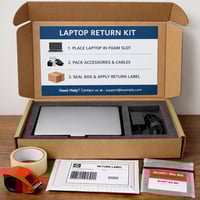
When an employee offboards or a device is due for refresh, it needs to come back. Reclamation programs provide prepaid return logistics, chain-of-custody documentation, and secure handling — so devices don't get lost and data doesn't get exposed.
5. Disposition (ITAD)
Retired devices are certified data-wiped, audited, and either remarketed for residual value or responsibly recycled. Certificates of destruction and downstream tracking give you the compliance documentation you need — especially important in regulated industries like financial services and healthcare.
Why Mid-Market Companies Struggle With Device Lifecycle Management
Enterprise companies often have the internal resources to manage this in-house. Small businesses don't have enough devices to justify a formal program. Mid-market organizations — typically 200 to 5,000 employees — sit in a gap: too many devices to manage informally, not enough internal capacity to build out a full DLM operation.
Common pain points include:
- Deployment delays that slow new hire onboarding
- Untracked assets that disappear during headcount reductions
- Repair costs that spike because there's no centralized process
- ITAD handled inconsistently, creating data security and compliance exposure
- No clear ROI visibility across the device fleet
- Depot infrastructure for staging, kitting, and deployment at scale
- Certified repair capabilities (not just swap-and-replace)
- Secure, documented reclamation logistics
- ITAD with certified data destruction and remarketing
- Asset tracking and reporting integrated across the lifecycle
- Flexibility to plug into your existing ITSM or MDM tools
What to Look for in a Device Lifecycle Management Partner
When evaluating vendors, the right partner should offer end-to-end service — not just one piece of the puzzle. Key capabilities to look for:
The Business Case for Getting This Right
Organizations that implement a coordinated DLM program typically see measurable improvements across three areas:
Cost reduction: Extending device life through certified repair, recovering residual value through remarketing, and eliminating the hidden costs of poor asset tracking all contribute to lower total cost of ownership per device.
Security and compliance: Consistent data destruction, chain-of-custody documentation, and certified disposition reduce the risk of data breaches tied to retired equipment — a growing regulatory concern for healthcare and financial services organizations.
Operational efficiency: When deployment, repair, and reclamation follow a defined process, your IT team spends less time on logistics and more time on strategic initiatives.
Frequently Asked Questions
What's the difference between IT asset management and device lifecycle management?
IT asset management (ITAM) focuses on tracking and managing the inventory and financial value of IT assets. Device lifecycle management is broader — it encompasses the operational programs that actually move devices through procurement, deployment, support, and disposition. ITAM is often the system of record; DLM is the operational program.
Can a depot services model work for distributed or remote workforces?
Yes — that's often where it adds the most value. A depot can stage, kit, and ship directly to employee home addresses or regional offices, eliminating the need for centralized IT involvement in every deployment.
How does device lifecycle management support ESG goals?
Responsible device disposition — including certified recycling and remarketing — keeps electronics out of landfills and extends the useful life of hardware. Many organizations include ITAD and refurbishment metrics in their sustainability reporting.
Device Depot, powered by Synetic Technologies, provides end-to-end depot services for mid-market organizations across the continental U.S. — including device deployment, certified repair, secure reclamation, and ITAD. Contact us to learn how a coordinated lifecycle management program can reduce your IT costs and compliance risk.